


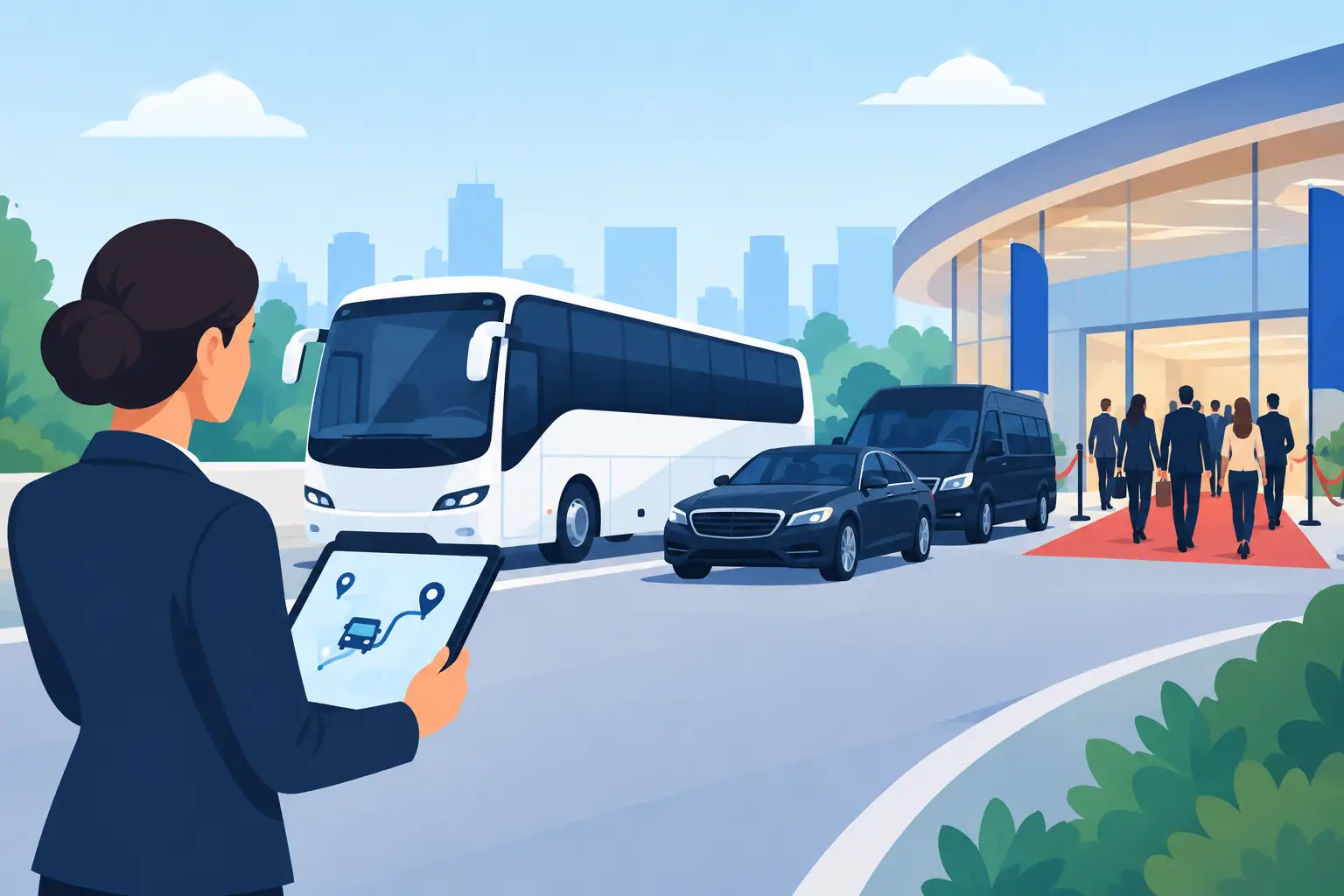
A guest arriving late to a board dinner, a bridal party split between cars, or a keynote speaker waiting at the airport can change the tone of an event before it begins. Knowing how to arrange event transport means treating every journey as part of the guest experience, not an afterthought. For corporate functions, weddings, conferences and private celebrations across Melbourne, a well-managed transport plan protects the schedule while giving guests the comfort, privacy and polished welcome they expect.
Start with the purpose of each journey
Event transport is rarely one trip from A to B. It may include airport arrivals, hotel transfers, venue shuttles, speaker movements, executive travel and late-night departures. Begin by identifying who is travelling, where they need to be and how important timing is for each movement.
Senior executives, overseas guests and presenters usually need dedicated chauffeur-driven vehicles. They may be working, taking calls or preparing for an appearance, so quiet space and direct travel matter more than filling every seat. Larger groups travelling between a hotel and a conference venue may be better suited to a coordinated shuttle schedule.
Consider the experience you want people to have on arrival. A premium sedan or SUV with a professional chauffeur suits VIP guests and smaller executive groups. A luxury people mover may be the better choice for families, delegates with luggage or wedding parties. The right vehicle is not simply the largest available option. It should suit passenger numbers, luggage, attire, mobility needs and the level of privacy required.
How to arrange event transport around a real schedule
The most reliable event plans work backwards from the non-negotiable moments. Start with the ceremony time, registration opening, first speech, airport landing time or meeting start. Then allow time for walking from the vehicle, security checks, lifts, registration queues and a sensible early-arrival buffer.
For a corporate event, aim to have keynote speakers and senior attendees at the venue well before their required arrival time. This gives them breathing room if traffic slows on the Monash, CityLink or the West Gate Freeway. For a wedding, allow for photography, loading dresses and formalwear, and any time needed for the bridal party to regroup between locations.
Airport journeys require their own planning. International arrivals can vary significantly due to passport control, baggage collection and customs. A chauffeur service that monitors flight status and provides a meet-and-greet pickup removes the need for guests to update multiple people while they are travelling. Their chauffeur can be ready at the agreed meeting point, assist with luggage and adapt to a delayed or early flight.
Avoid planning every vehicle to arrive at the exact same minute. Stagger arrivals where venue access is limited, particularly at CBD hotels, busy restaurants and major event spaces. A five to ten-minute window can prevent cars from circling the block and guests from stepping onto the footpath at the wrong entrance.
Build in time for Melbourne conditions
Melbourne traffic can change quickly due to weather, sporting fixtures, roadworks and peak-hour congestion. A route that is straightforward on a Sunday morning may be slow on a weekday afternoon or during a major event at the MCG, Rod Laver Arena or Marvel Stadium.
Your transport provider should account for local conditions rather than relying on a single estimated travel time. Share the date, pickup windows and every venue address early, including loading bay instructions if you have them. For important guests, schedule a little extra time instead of hoping traffic cooperates.
Match the fleet to passengers and luggage
Passenger capacity is only half the equation. Four travellers with international suitcases may not comfortably fit in a standard sedan, while six guests travelling light may prefer one spacious executive vehicle over two separate cars. Be clear about luggage, golf bags, prams, display materials, event signage and any other items that will travel in the boot.
A carefully selected fleet also creates consistency. If executives are being collected from several locations, similar premium vehicles present a more cohesive and professional experience than a mix of ad hoc transport options. Recognised luxury sedans, SUVs and executive vehicles provide comfort without making guests feel as though they are managing their own logistics.
For weddings and special occasions, think beyond the ceremonial journey. You may need separate vehicles for the couple, the bridal party, parents, interstate guests and late-night returns. It can be more efficient to reserve a vehicle and chauffeur for a defined period than to arrange separate point-to-point transfers throughout the day. The best approach depends on your itinerary and how much flexibility you need if timings shift.
If children are travelling, request suitable child seats when booking and confirm the children’s ages and requirements. This should never be left to a last-minute assumption.
Confirm venue access before the day
Even an excellent chauffeur and premium vehicle can be delayed by unclear access instructions. Ask each venue where vehicles should arrive, wait and depart. Check whether there is a designated porte-cochere, loading zone, underground car park height limit or security gate.
CBD venues often have restricted stopping areas, while private estates, wineries and regional properties may have narrow driveways or limited turning space. A chauffeur should know whether to collect guests from the main entrance, a side street or a hotel lobby. For conferences, confirm the preferred entrance for delegates and a separate access point for speakers or VIPs if one is available.
Provide a single event contact who can make decisions on the day. This person should be reachable by mobile, understand the run sheet and be authorised to approve reasonable changes. It prevents chauffeurs from receiving conflicting instructions from multiple organisers.
Choose a provider built for high-stakes travel
Event transport is not simply about booking a car. You are trusting someone with your guests, your timing and your reputation. Look for a licensed and insured chauffeur provider with clear pricing, professional chauffeurs, well-presented vehicles and a genuine ability to support changes outside standard business hours.
Ask practical questions before confirming. Can the provider manage multiple pickups? Do they monitor flights for airport arrivals? Will guests receive chauffeur and vehicle details? What happens if the event runs late? Can the provider assist with luggage, child seats or a discreet meet-and-greet service?
For high-profile or corporate travel, discretion matters as much as presentation. Guests should not need to navigate rideshare cancellations, explain an address repeatedly or wait on a busy footpath after an evening function. A professionally managed service gives organisers one accountable point of contact and gives travellers a first-class experience from door to door.
VIP Cars Australia can coordinate chauffeur-driven event travel across Melbourne and Victoria, from individual executive transfers to multi-vehicle schedules for important occasions. The value is in the detail: punctual pickups, local road knowledge, polished hospitality and a vehicle that arrives ready for the occasion.
Give guests clear, simple travel information
Once transport is confirmed, send guests only the information they need: pickup time, pickup address, expected journey time, chauffeur contact details where appropriate, and what to do if their plans change. For airport guests, include the meeting point and instructions for after they collect their luggage.
Keep the master run sheet more detailed than the guest message. It should record every passenger, mobile number, flight number, vehicle type, pickup location, venue access note and contingency plan. This is especially useful when several flights arrive close together or an event moves across multiple locations.
Keep control on the event day
On the day, reconfirm the schedule with your transport provider and event contact. Notify them immediately if a flight is delayed, a meeting finishes early or the venue changes its access arrangements. Early communication creates options. Late communication often creates unnecessary pressure.
For major events, consider a dedicated transport coordinator who tracks departures and arrivals, rather than asking a busy host or conference manager to handle every call. Chauffeurs should have the latest itinerary, but the coordinator can decide priorities when two plans change at once.
The finest event transport is almost invisible to guests. They feel expected, welcomed and looked after, while organisers know every important movement has been handled with care. Give the plan enough time, choose service standards that match the occasion, and your guests can focus on the reason they came rather than the journey it took to get there.


Comments are closed