


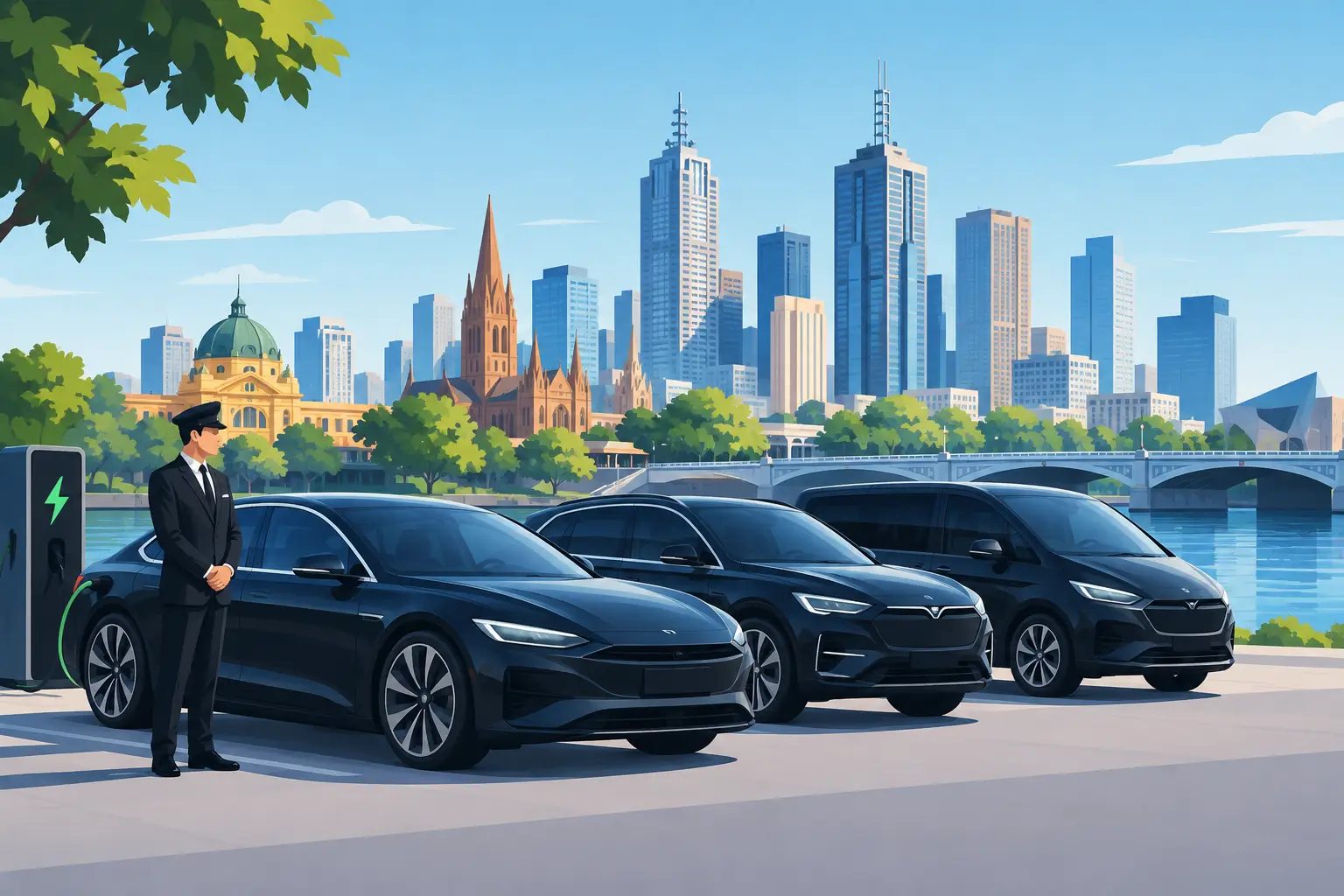
A premium vehicle should make the journey feel easier from the moment the rear door closes. That is why electric chauffeur fleet trends are attracting attention across Melbourne’s airport, corporate and private travel market. For clients, the change is not simply about choosing an EV. It is about whether quieter performance, modern cabin technology and lower-emission travel can be delivered without compromising the punctuality, privacy and polished service expected from a professional chauffeur.
Electric chauffeur fleet trends are moving beyond novelty
Electric vehicles once appeared mainly in private driveways or as a talking point at corporate events. They are now becoming a practical consideration for chauffeur operators, particularly where journeys are planned in advance and service standards are tightly managed. Airport transfers, executive point-to-point travel and city-based corporate bookings are well suited to electric vehicles because the route, passenger numbers and collection time can usually be confirmed before the vehicle is dispatched.
For Melbourne travellers, the appeal is immediate. An electric premium sedan or SUV is exceptionally quiet in traffic, with smooth acceleration and no idling engine noise outside a hotel, office tower or private residence. That matters when a CEO is taking a confidential call on their mobile from the back seat, when an international visitor has just completed a long-haul flight, or when a family simply wants a calmer trip home from the airport.
The environmental benefit also matters, especially for organisations reporting on sustainability targets or looking to reduce the emissions associated with executive travel. However, luxury transport is not a place for vague promises. Clients still expect a clean, spacious vehicle, a professional chauffeur, room for luggage and a vehicle ready at the agreed time. The strongest electric fleet programs treat sustainability as an enhancement to service, not a substitute for it.
The premium experience is becoming quieter and more considered
Electric chauffeur vehicles change the feel of a journey in ways passengers notice. With less drivetrain noise and vibration, the cabin can feel more composed, particularly on early airport runs or evening transfers after a full day of meetings. Conversation is easier. Calls on mobile phones are more private. The ride can feel less tiring on Melbourne’s stop-start city roads.
This is also influencing how premium operators select vehicles. The badge on the bonnet still carries weight, but rear-seat space, ride quality, climate control, charging points and boot capacity are equally important. A vehicle that looks impressive at the kerb but cannot comfortably accommodate two passengers with international luggage is not suitable for a first-class airport transfer.
Electric SUVs can be particularly useful for small groups, families and travellers carrying multiple cases. Yet size alone is not the answer. Battery placement, vehicle design and seating configuration can affect luggage capacity, so operators need to match the car to the booking rather than assume every EV serves the same purpose. For a solo executive, a refined electric sedan may be ideal. For a family travelling with prams, child seats and several bags, a larger vehicle or a premium hybrid may be the more sensible choice.
Charging discipline is the real operational test
The most significant shift is happening behind the scenes. A successful electric chauffeur fleet relies on disciplined scheduling, reliable charging access and clear contingency planning. Unlike a conventional vehicle, an EV cannot simply be refuelled in a few minutes between jobs. Operators must understand expected range in real conditions, including heavy traffic, air-conditioning use, cold mornings, passenger loads and motorway driving.
For chauffeur services, charging is part of fleet preparation. Vehicles should return to a dependable base charging arrangement where possible, with bookings allocated according to distance and available battery range. A transfer from Melbourne Airport to the CBD is generally straightforward for a suitably charged vehicle. A full-day hire across metropolitan Melbourne, followed by a late-night return, calls for more careful planning.
Public charging has a role, but it should not be the foundation of a premium booking. Chargers may be occupied, unavailable or located away from a practical waiting point. A client should never feel that their itinerary is being shaped around a vehicle’s battery level. The chauffeur’s focus must remain on the passenger’s schedule, whether that means monitoring a delayed flight, waiting during a meeting or adjusting a pickup after an event runs over time.
This is where hybrid fleets remain relevant. For longer regional transfers, multi-stop itineraries or high-demand periods, a premium hybrid or conventional executive vehicle can provide useful flexibility. The trend is not an overnight switch to one type of vehicle. It is a more intelligent mix of vehicles, chosen with reliability as the non-negotiable standard.
Corporate travel is driving more deliberate fleet choices
Corporate clients are increasingly asking sharper questions about transport. They want to know how a provider manages carbon-conscious travel, but they also need certainty around arrival times, invoicing, passenger safety and vehicle presentation. An electric option can be a valuable part of a corporate transport policy, particularly for regular CBD meetings, airport transfers and events where a business wants its travel arrangements to reflect its environmental commitments.
The best approach is practical rather than performative. A company may choose an electric vehicle preference for standard metropolitan journeys while retaining the ability to request a larger SUV, van or long-range vehicle when the itinerary demands it. That protects the passenger experience and avoids placing unnecessary pressure on the chauffeur team.
There is also a reputational benefit when the execution is right. Arriving in a quiet, immaculately presented electric vehicle can communicate care, modernity and attention to detail. For visiting clients, investors or senior leaders, those small details set the tone before the meeting has even begun.
Airport transfers remain the benchmark for reliability
Airport work exposes every weakness in a transport operation. Flight times move, baggage collection can be slow, traffic conditions change and passengers often arrive tired, time-poor or unfamiliar with Melbourne. Electric vehicles can perform very well in this setting, but only when fleet planning is built around the realities of airport service.
A professionally managed booking should still include real-time flight monitoring, a clear meeting arrangement, assistance with luggage and a vehicle selected for the passenger count and baggage requirements. The powertrain should be largely invisible to the customer. What they remember is whether their chauffeur was waiting, whether the vehicle was comfortable and whether they arrived at their destination feeling looked after.
For VIP Cars Australia, that principle remains central: premium transport should feel calm, organised and personal, regardless of whether the journey is completed in an electric, hybrid or traditional luxury vehicle. Technology is valuable when it strengthens the service, not when it creates another task for the passenger to manage.
What to ask when booking an electric chauffeur vehicle
Clients who specifically prefer electric transport do not need to become vehicle experts, but a few clear questions can help ensure the booking suits the trip. Ask whether the selected vehicle has adequate rear-seat and boot space for your party, especially for airport travel. If you have a child seat, golf clubs, samples, presentation equipment or extra luggage, mention it at the time of booking.
For a longer itinerary, share the full schedule where possible. This includes planned stops, waiting time, return travel and any regional destinations. A reputable chauffeur provider will advise if an electric vehicle is appropriate or recommend an alternative that better protects the timing of your day. That is not a compromise in quality. It is professional planning.
It is also reasonable to ask about vehicle category rather than requesting a specific model. Fleet availability can change, and the right operator will provide an equivalent premium vehicle that meets the agreed standard. The priority is a comfortable, immaculate car and a prepared chauffeur, not a last-minute substitution that leaves little room for luggage or flexibility.
The next phase will be measured, not rushed
Melbourne’s electric chauffeur market will continue to expand as vehicle range improves, charging becomes more dependable and premium manufacturers offer more suitable sedans and SUVs. The pace will vary between city transfers, airport bookings and regional journeys. A short executive transfer and a full-day Yarra Valley itinerary have very different operational demands, and responsible providers will plan accordingly.
For travellers, the most useful question is not simply whether a chauffeur fleet is electric. It is whether the service has been designed around your journey. When vehicle choice, charging preparation and hospitality work together, electric travel can offer a remarkably quiet, comfortable and confident way to move through Melbourne.


Comments are closed