


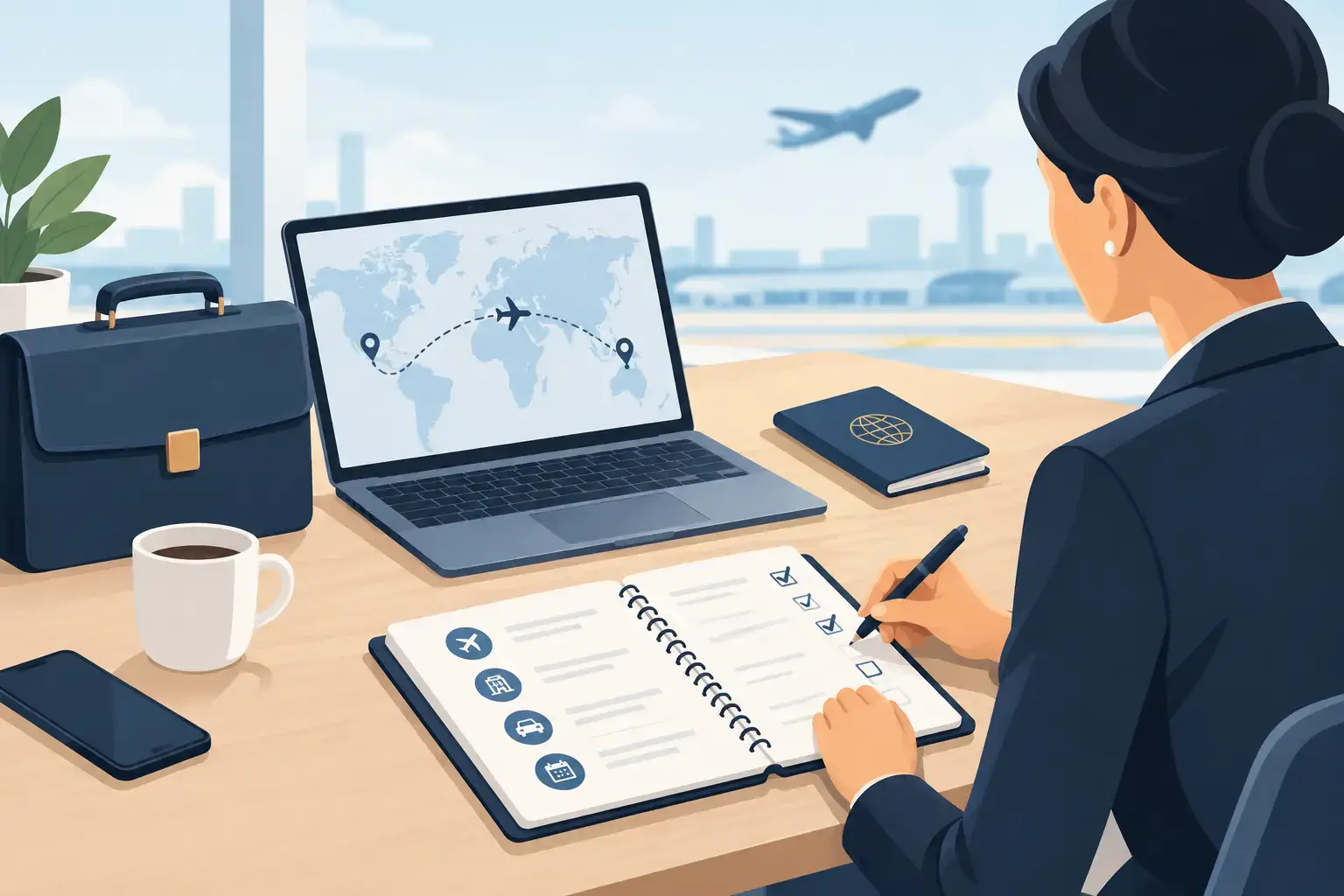
A delayed flight, an unfamiliar terminal or one unrealistic cross-city transfer can put an executive on the back foot before the first meeting begins. Knowing how to prepare an executive itinerary means treating every movement as part of the business day, not as a gap between appointments. The objective is simple: preserve time, privacy and composure while giving the traveller one clear plan they can trust.
For a CEO, visiting client or senior delegate, a good itinerary should feel almost invisible. It anticipates the details without crowding the page, gives the driver what they need to deliver punctual service, and leaves enough margin for the unexpected.
Start with the purpose of the trip
Before selecting flights, restaurants or vehicles, establish what the traveller needs to achieve. Is the visit centred on a board meeting in the Melbourne CBD, a series of client calls across the city, a conference at a major venue, or a discreet airport-to-hotel transfer before an early departure? The answer affects the order of appointments, the amount of travel time required and the standard of transport to arrange.
Speak with the executive or their assistant about priorities that are easy to overlook. These may include time for calls in the vehicle, a quiet place to review a presentation, a preferred hotel entrance, dietary requirements, accessibility needs, or the need to travel with colleagues. A premium SUV may be the right choice for a small team with luggage, while a luxury sedan may better suit a solo executive who wants a quiet, private journey.
The itinerary should reflect the actual pace of the day. Packing in one extra meeting can appear efficient on paper, but it can create avoidable pressure if traffic builds, a discussion runs late or security access takes longer than expected.
Build the executive itinerary around fixed commitments
Begin with items that cannot move: flight numbers, meeting start times, venue bookings, conference sessions, dinner reservations and return departures. Add these first, using local time throughout. For interstate and international travellers, clearly state the time zone rather than assuming everyone will interpret it correctly.
Then work backwards. If a meeting starts at 10.00 am, the itinerary should show more than a 10.00 am arrival. Include the requested arrival time, the appropriate vehicle collection time, estimated travel duration and a practical buffer for traffic, building access and locating the correct floor or reception desk.
In Melbourne, travel times depend heavily on the time of day, weather, roadworks and major events. A journey that is straightforward at mid-morning can take considerably longer during peak periods. Airport travel requires the same care. Melbourne Airport is around 20 kilometres from the CBD, but travel time can vary considerably, particularly on weekday mornings and afternoons. Plan conservatively when an onward flight or high-stakes meeting is involved.
Use clear, usable time entries
Every entry should answer three questions: where does the traveller need to be, when do they need to be there, and how will they get there? Avoid vague notes such as “transfer to meeting” or “airport in the afternoon”. A driver and executive assistant need operational detail, including collection address, meeting point, destination, contact person and intended arrival time.
For example, write “8.15 am collection from hotel porte-cochère, arrive at Collins Street office by 8.45 am” rather than “leave hotel for meeting”. This format is easier to action and leaves less room for misunderstanding.
Put airport transfers at the centre of the plan
Airport arrivals are where executive itineraries most often lose momentum. Flight delays, baggage collection, terminal changes and missed calls can quickly undermine a carefully planned day. Include the airline, flight number, scheduled arrival time, terminal and whether the traveller has checked luggage.
For international arrivals, allow realistic time for immigration, baggage collection and customs. It depends on the flight, passenger volume and whether the traveller is travelling with only cabin luggage. The important point is to avoid scheduling a client meeting too close to the expected landing time.
A professional chauffeur service adds control here through real-time flight monitoring, a confirmed airport meeting point, meet-and-greet service and luggage assistance. The traveller should know exactly who is meeting them, how they will be identified and which mobile number to call if circumstances change. For departures, note the airline, terminal, flight time and recommended airport arrival time, then schedule the vehicle collection accordingly.
Include transport details that a chauffeur can act on
A chauffeur cannot deliver first-class service from a calendar invitation alone. The itinerary needs accurate pickup locations, not just building names. Include the street address, preferred entrance, hotel lobby or porte-cochère, and any access instructions such as loading zones, security gates or concierge notification.
For each transfer, record the passenger name, mobile number, number of travellers and luggage estimate. Add special requirements early, whether that is a child seat for a family member, room for presentation materials, wheelchair accessibility, extra waiting time or a request for discretion. These details determine vehicle selection and ensure the chauffeur arrives prepared.
It is also wise to note the decision-maker for changes. An executive in a meeting may not be available to approve a revised collection time, so the itinerary should identify the executive assistant, event organiser or corporate travel contact who can make arrangements on their behalf.
VIP Cars Australia can coordinate chauffeur-driven airport transfers and corporate transport across Melbourne and Victoria, giving travellers a single, professional point of contact rather than relying on uncertain taxi queues or rideshare availability.
Give the itinerary room to breathe
The most polished executive itineraries do not look overcrowded. They contain deliberate buffers, particularly between airports, presentations, formal functions and meetings in different precincts. A 15-minute margin can protect a client introduction, a confidential phone call or simply a moment to regroup.
However, buffers should be proportionate. Too much empty time can frustrate a traveller who values efficiency, while too little can make every delay feel like a failure. Consider the stakes. A routine internal meeting may allow a tighter schedule; an investor presentation, airport departure or wedding transfer deserves greater protection.
Where the executive has a break, identify a suitable location rather than leaving an undefined gap. This may be the hotel, a private lounge, a nearby café with space for a call, or time retained in the vehicle between appointments. For travellers who value privacy, remaining with the chauffeur can be more comfortable than searching for a public place to wait.
Make one version for the traveller and one for operations
An executive needs a clean, concise itinerary that can be read quickly on a mobile. It should show the day in chronological order, essential contacts, addresses, transport arrangements and confirmation numbers where relevant. Keep it uncluttered. Too many internal notes make a document harder to use when time is short.
The operational version can include more detail: chauffeur instructions, flight-monitoring notes, backup contacts, billing references, passenger preferences and contingency options. Separating the two versions protects privacy and prevents confidential internal information from being circulated unnecessarily.
Use consistent formatting throughout. Write dates in full where there is any possibility of confusion, use either 24-hour time or am/pm consistently, and include full venue names. Check that phone numbers have the correct country code for international guests.
Plan for changes before they happen
Even the best itinerary must adapt. Flights are delayed, meetings overrun, weather affects roads and executives may decide to change plans at short notice. The difference between a stressful day and a controlled one is having a response already in place.
Identify the non-negotiables, such as the return flight or keynote address, then consider alternatives for everything around them. If an inbound flight is delayed, can the first meeting move online or be shortened? If the executive needs to leave a lunch early, can the chauffeur collect them from a secondary entrance? If a trip includes regional travel, is there enough flexibility for changing road conditions?
Confirm transport bookings and the next day’s first collection the evening before. This is also the right moment to verify flight details, passenger numbers, luggage requirements and any last-minute venue changes. A quick check prevents the small errors that create a poor first impression.
Final review before sending
Read the itinerary as though you are the traveller arriving in Melbourne for the first time. Could you find the driver, identify the correct entrance, contact the right person and understand where you need to be next without making several calls? If not, the plan needs more clarity.
Check addresses against booking confirmations, confirm that meeting end times align with the next collection, and make sure the chauffeur has current contact details. Privacy matters too: share personal phone numbers and travel information only with people who need them to deliver the service.
A well-prepared executive itinerary is a mark of good hospitality. When every transfer, meeting and airport movement has been considered with care, the traveller is free to focus on the conversation, decision or occasion that brought them there.


Comments are closed