


At 4.45 am, a delayed interstate flight touches down at Melbourne Airport. By 6.30 am, the director needs to be at a Southbank location meeting the crew, while lead talent is due at a separate hotel pickup an hour later. This is where a well-planned film production transport example proves its value. It is not simply a matter of arranging cars. It is about protecting the call sheet, managing changing conditions and giving key people a calm, private place between demanding commitments.
For productions working across Melbourne and regional Victoria, transport is often one of the quieter forces behind a successful shoot. When it is handled professionally, cast, executives and senior crew arrive prepared rather than flustered. When it is not, small delays can flow into missed lighting windows, overtime costs and unnecessary pressure on the production team.
A film production transport example: a Melbourne shoot
Consider a one-day commercial shoot with an airport arrival, city location work and an evening client dinner. The production involves an interstate director, two lead talents, an agency team, a client representative and a producer moving between multiple venues.
The director’s flight is scheduled to arrive at 4.35 am. A chauffeur monitors the flight status, adjusts for any delay and is ready at the agreed airport meeting point with clear identification. After luggage assistance, the director travels in a premium sedan with enough boot space for personal bags, wardrobe items and a carry-on equipment case. The vehicle is quiet, clean and prepared for the first briefing of the day.
At 6.00 am, the chauffeur arrives at the production office for the client representative. A separate executive vehicle then collects the agency team from their CBD hotel. This separation matters. Senior stakeholders may need privacy for calls, while a small group travelling together may need additional seating and luggage capacity. Treating every passenger movement as identical is how an otherwise organised shoot becomes uncomfortable or late.
By 7.00 am, the key decision-makers have arrived at the location in a controlled sequence. The producer knows who is on site, who is en route and who needs follow-up. No one is left searching for a rideshare at the kerb or explaining a confusing pickup point over the phone.
Start with the call sheet, not the vehicle
The best transport plan begins with the production schedule. Before selecting a sedan, SUV or limousine, identify every movement that can affect the day: airport arrivals, hotel pickups, location changes, meal breaks, client visits, wardrobe fittings and final transfers after wrap.
A transport brief should include passenger names, mobile numbers, flight details, pickup addresses, call times, luggage requirements and destination contacts. It should also flag any guest who requires a child seat, additional assistance or a particularly discreet arrival. For high-profile talent or senior executives, it is sensible to limit passenger details to the people who genuinely need them.
Call times should also allow for Melbourne realities. Peak-hour traffic, major sporting events, roadworks, rain and CBD access restrictions can alter a journey that appears simple on a map. A professional chauffeur service brings local road knowledge to the plan and can recommend a more realistic pickup time before the day is under pressure.
The vehicle choice follows the brief. A premium sedan suits a solo executive, director or talent travelling light. An SUV is often better for two or three passengers with luggage, garment bags or production materials. For VIP guests travelling as a group, a larger executive vehicle may be the more comfortable option. The right decision depends on passenger experience as much as capacity.
Separate VIP movements from unit logistics
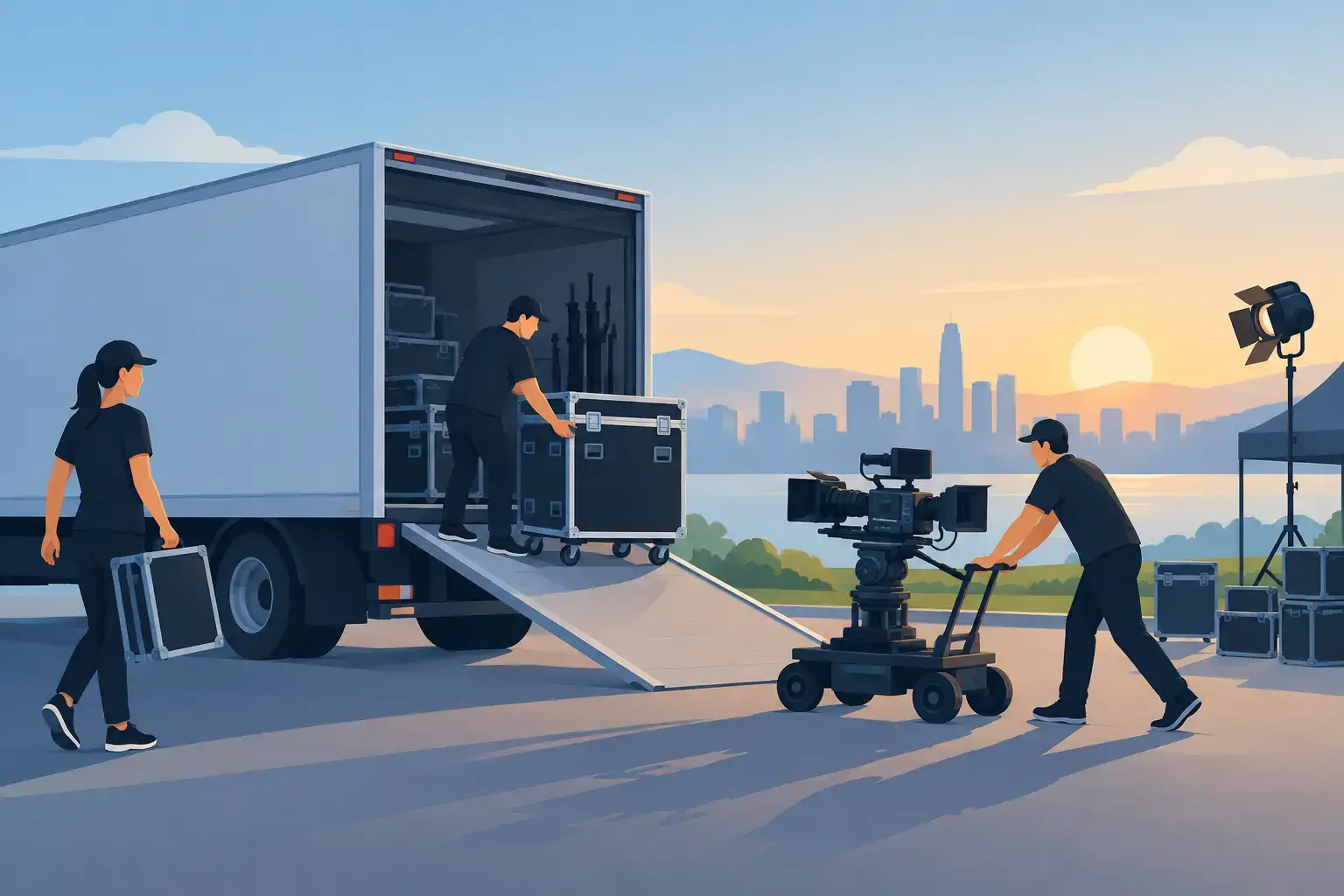
Film transport covers several different needs, and they should not be bundled together without thought. Chauffeur-driven transport is particularly valuable for talent, producers, agency teams, clients and visiting executives who need punctuality, privacy and a polished arrival. Equipment, lighting, grip and larger crew movements usually require specialist production vehicles, trucks or vans managed through separate logistics arrangements.
This distinction is practical. A premium chauffeur vehicle should not be treated as a substitute for a fully loaded unit van, and a production truck is not the place for a client travelling to a presentation. Separating these responsibilities creates clearer accountability and a better experience for everyone.
It also helps the production budget. Book premium transport where the service level will make a material difference: airport pickups, senior stakeholder movements, talent transfers, location scouts and late-night returns. For routine crew travel, a different arrangement may be more appropriate. Luxury is most effective when it is purposeful.
Build flexibility into the shooting day
A call sheet is precise, but a shoot is rarely fixed. A scene runs over, weather changes, a talent hold is extended or a client meeting moves by 30 minutes. Transport should be planned with enough flexibility to absorb these changes without forcing the producer to rebuild the entire schedule.
For the commercial shoot, the director’s vehicle may be released after drop-off if no further movement is needed until wrap. The talent vehicle, however, may remain on standby nearby because wardrobe, touch-ups and changing scene order can create short-notice transfers. The agency team might have a pre-booked afternoon move to a second location, with the chauffeur receiving updates through one nominated production contact.
Standby service costs more than a simple point-to-point booking, but it can be worthwhile when timing is uncertain and the passenger cannot be left waiting. The trade-off should be decided before the shoot, not while a key guest is standing on the footpath.
A reliable plan also includes a fallback. If the airport flight is heavily delayed, the chauffeur should know whether to wait, redirect to the hotel or contact the producer for revised instructions. If a CBD street is closed, the passenger should receive a clear alternate meeting point rather than a vague message to find the car nearby.
Airport arrivals deserve special attention
Airport transfers are often the first impression of the production for an interstate guest. After a long flight, a chauffeur waiting at the correct meeting point, ready to assist with luggage, sets a professional tone before the person reaches the set.
Flight monitoring is especially useful for early arrivals and international travel. It removes the need for a producer to keep checking arrival boards while managing other tasks. A meet-and-greet service also avoids the common problem of guests walking into the public pickup area without knowing which lane, rank or door they need.
For international talent or clients, allow extra time for baggage collection and border formalities. For domestic arrivals, check whether they have checked luggage and whether they are comfortable receiving instructions by mobile. Simple questions asked in advance prevent confusion at a busy terminal.
Professionalism matters off camera too
The passenger experience does not end once the vehicle arrives. Drivers should be professionally presented, licensed and insured, familiar with the route and respectful of the production environment. Discretion is essential. Conversations heard in the vehicle, addresses visited and passenger schedules should be treated as private information.
The vehicle itself should support the purpose of the trip. It needs to be immaculately presented, air-conditioned and comfortable, with room for luggage in the boot. For executives heading into a meeting, a smooth, quiet journey creates space to prepare. For talent finishing a long day, it offers a welcome break from the activity of set.
VIP Cars Australia can support these high-value passenger movements with chauffeur-driven sedans, SUVs and executive vehicles across Melbourne and Victoria. The focus is straightforward: punctual collection, professional presentation, clear communication and a first-class experience for the people whose time matters most.
How to brief a chauffeur service for a shoot
Give the transport provider one clear point of contact, ideally the producer, production coordinator or location manager. That person should be authorised to confirm schedule changes, approve additional waiting time and handle last-minute passenger amendments. Multiple people giving directions creates avoidable confusion.
Confirm the itinerary the day before, then reconfirm early on the morning of the shoot where appropriate. Provide flight numbers rather than only scheduled arrival times, exact pickup addresses rather than broad landmarks, and passenger mobile numbers with permission to contact them. If the location has restricted access, include the gate, loading zone or approved drop-off instructions.
For evening wrap, consider fatigue as well as timing. A long shooting day can leave talent, executives and producers tired. A pre-arranged chauffeur transfer is safer and more considerate than expecting them to organise their own transport after a demanding day.
A well-run production transport plan should feel almost invisible to its passengers. Share the schedule early, allow sensible contingency and reserve premium chauffeur service for the journeys where comfort, privacy and punctuality can keep the entire production moving with confidence.


Comments are closed